
Merchandise

Rigwreck finds The Crossing immersed in the urgent, word-driven choral writing of celebrated British composer Gabriel Jackson. The five works are guided by texts that wrestle with what the Earth tries to tell us, gun violence, longing, and the fragile bonds between self and world. Conducted by Donald Nally, the ensemble gives voice to poetry by Gustav Sobin, Pierre Joris, Dean Rader, Walt Whitman and Kārlis Vēdeņš (in Ieva Lešinska’s translation).
From the ecological reckoning of the title work, written in response to the Deepwater Horizon disaster, to the intimacy of Yes, I am your angel and the spiritual expanse of Darest thou now O soul?, Jackson’s music requires the singers to come together in virtuosity and vulnerability. Each work was written for The Crossing and Donald Nally over the span of a decade and recorded in 2024 at St. Peter’s Church in Malvern PA. Rigwreck is contemporary choral music as witness and journalist, transcendent, and direct.

Over the course of the last 15 years, David Lang and The Crossing, the Grammy-winning chamber choir conducted by Donald Nally, have crafted a body of work that stands apart from the rest for its profound spiritual connection to our shared sense of humanity — through our stories, our myths, our beliefs and our dreams. 𝙩𝙝𝙚 𝙨𝙚𝙣𝙨𝙚 𝙤𝙛 𝙨𝙚𝙣𝙨𝙚𝙨 is a milestone of sorts, because it celebrates that connection, across time and space, to deliver a message that music can be a benevolent force for change if we only take the time to listen.
“This album is a collection of works that capture the intimate side of The Crossing’s relationship with David Lang,” Nally explains. “Only two were written for us, yet the others reflect a shared world view, a common idea about sound and community, and a collective focus on our reason for singing. David’s thoroughly considered thoughts on ‘why we do this’ have influenced The Crossing’s perpetually reexamined thoughts on that question: how to communicate deep feelings, absent of ego.”

With four Grammys and ten nominations, The Crossing takes a new direction with Ted Hearne's FARMING. In his new work, Hearne — the two-time Pulitzer Prize finalist praised by Pitchfork for creating “some of the most expressive socially engaged music in recent memory” — confronts technology’s ominous encroachment upon humanity’s very being. FARMING tackles the long-tail impact of settler colonialism and its philosophical motivations on agricultural degradation.
Hearne dives headfirst into the Uncanny Valley, conjuring a soundworld fraught with neck-breaking shifts and stylistic contradictions. Its unholy marriage of ersatz Americana, digitally altered choral arrangements, and hyperpop’s synapse-frying maximalism inverts technology’s smoothing impulses in favor of an unwieldy, knotty expression of modern ennui and alienation.
Upon its 2023 live performance debut, The New York Times called FARMING “a suggestive, chaotically ambitious, often poignant reflection on colonization, consumption, marketing, entrepreneurship.” It’s certainly intellectually audacious: In repurposing primary texts from William Penn and Jeff Bezos, FARMING contends with the mythological constructs humans erect to justify their participation in an economy’s unfeeling entropies — and reveals the ethical void at their core.

Like his Pulitzer-winning work the little match girl passion, David Lang’s 𝘱𝘰𝘰𝘳 𝘩𝘺𝘮𝘯𝘢𝘭 tries to get to the core of what a religious experience can be. “What I love about hymnals,” the composer writes in his liner notes to the CD, “is that they’re a catalog of things a community of worshippers can agree on — a catalog that can be sung. And what the worshippers are singing about matters.”
𝘱𝘰𝘰𝘳 𝘩𝘺𝘮𝘯𝘢𝘭 is a concert-length work written The Crossing, conducted by Donald Nally. Lang constructed the text by stitching together lines, phrases and poignant utterances from sources as varied as the Old Testament, Mahatma Gandhi and Tolstoy — to name just a few. As Lang explains: “This piece is trying to say: The reason we are coming together is to remember how important we are to each other, and to remember how important it is that we take care of each other.”
credits
released December 13, 2024
Produced by Paul Vazquez, Donald Nally, and Kevin Vondrak
Recording Engineer: Paul Vazquez
Assistant Recording Engineers: Christopher Vazquez and Codi Yhap
Editing, Mixing, and Mastering: Paul Vazquez
Recorded at Articulate Studios, Bloomsbury, NJ on December 18-20, 2023
poor hymnal was co-commissioned for The Crossing and Donald Nally by Elizabeth and Justus Schlichting, Jill and Loren Bough, and Peggy and Mark Curchack, and by the Nederlands Kamerkoor.
The premiere performance and recording of poor hymnal are made possible through the generous support of Carol Westfall.

New works from six composers unknown to one another and yet wondrously aligned; their music weaves together seamlessly, even mystically, into a meaningful story of spirituality and interconnectedness. Warmth and sparkle alternate effortlessly in the choral textures created by this renowned ensemble, enveloping listeners in a sound that travels from the closed arms of a loved one to the stars above. Available in stereo and Dolby Atmos immersive audio formats, MECIENDO blends the intimate and the profound in an awe-inducing performance.

Recently named Musical America’s 2024 Ensemble of the Year, Donald Nally’s chamber choir The Crossing stuns with their latest studio album, WAYS YOU WENT. Vibrant, exhilarating, and uplifting, this new release features original compositions by composers Martin Bresnick and Mason Bates.
WAYS YOU WENT is a yin and yang of interconnected opposites. Bresnick’s song cycle Self-Portraits 1964 exclusively deals with the life and personality of a single man: young and intellectual, working as a trash collector to put himself through college, and escaping into literature at night. Bates’ trilogy Mass Transmission takes a telegraph conversation between mother and daughter in the 1920s and sets it to music, contrasting the warmth of human communication and a mechanistic medium. Both of these cycles, one introspective, the other socially oriented, are snapshots of a time gone by. The Crossing brings both to life with perfect mastery.

The Crossing’s first vinyl LP - a deluxe two-disk set that is an audiophile’s dream. A brilliant amalgam of Wendell Berry’s words and Gavin’s singular musical language, remastered for vinyl by Dave McNair to capture the sound of the individual singers of The Crossing, and with the art of Steven Bradshaw now blown up and even more striking.
This first LP was made possible through our audiophile board member Andrew Quint’s tireless, successful campaign to assemble a group of audio experts to support its production.
A Native Hill is made possible through gifts from:
Acora Acoustics Corporation
The Absolute Sound
MC Audiotech, Mark Conti, Managing Director
Anonymous
The Voice That Is, LLC.
Haniwa Audio
Andrew Quint
Luciano Virgili
James Baum
ABOUT A NATIVE HILL:
Navona Records presents A Native Hill from Philadelphia’s professional chamber choir, The Crossing. This monumental unaccompanied work is the result of a collaboration with composer Gavin Bryars, whose previous work for The Crossing won them their first of two recent Grammy awards. With intimate knowledge of the individual voices and art of each singer, Bryars composed A Native Hill to capitalize on the group’s unique sound, personality, and esprit de corps. A Native Hill is based on American author and environmentalist Wendell Berry’s 1968 essay of the same name, which examines bucolic elements of rural life, suffused with deeper metaphysical and political implications. The new album is full of rich, complex vocal textures, dense chromatic clusters, and moments of profound simplicity, offering an opportunity to reflect on life’s timeless questions.

With four Grammys and ten nominations, The Crossing takes a new direction with Ted Hearne's FARMING. In his new work, Hearne — the two-time Pulitzer Prize finalist praised by Pitchfork for creating “some of the most expressive socially engaged music in recent memory” — confronts technology’s ominous encroachment upon humanity’s very being. FARMING tackles the long-tail impact of settler colonialism and its philosophical motivations on agricultural degradation.
Hearne dives headfirst into the Uncanny Valley, conjuring a soundworld fraught with neck-breaking shifts and stylistic contradictions. Its unholy marriage of ersatz Americana, digitally altered choral arrangements, and hyperpop’s synapse-frying maximalism inverts technology’s smoothing impulses in favor of an unwieldy, knotty expression of modern ennui and alienation.
Upon its 2023 live performance debut, The New York Times called FARMING “a suggestive, chaotically ambitious, often poignant reflection on colonization, consumption, marketing, entrepreneurship.” It’s certainly intellectually audacious: In repurposing primary texts from William Penn and Jeff Bezos, FARMING contends with the mythological constructs humans erect to justify their participation in an economy’s unfeeling entropies — and reveals the ethical void at their core.
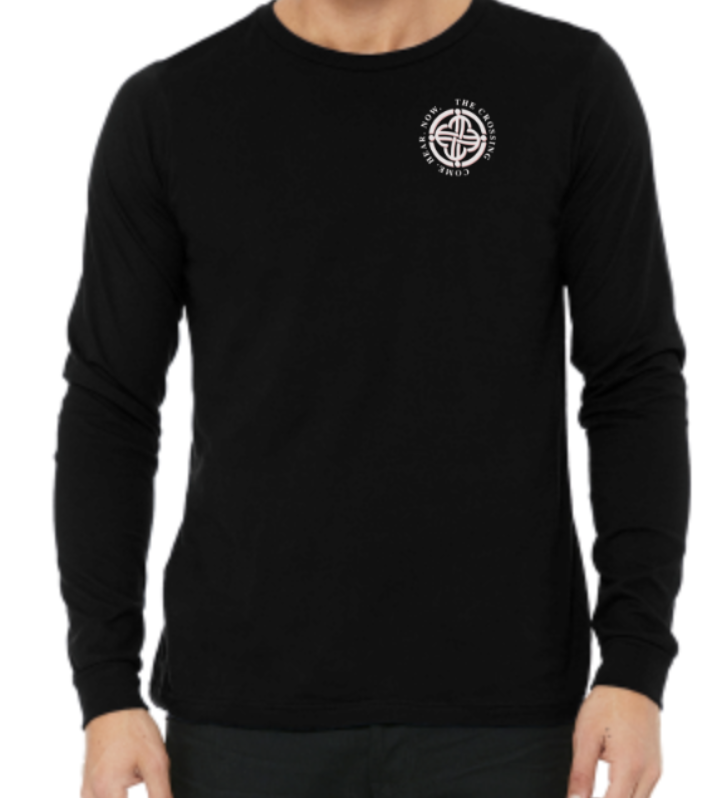
The Crossing “Knot” design, on a black long sleeve T-shirt.
Unisex Jersey Long-Sleeve T-Shirt, Bella + Canvas | 3501 100% cotton
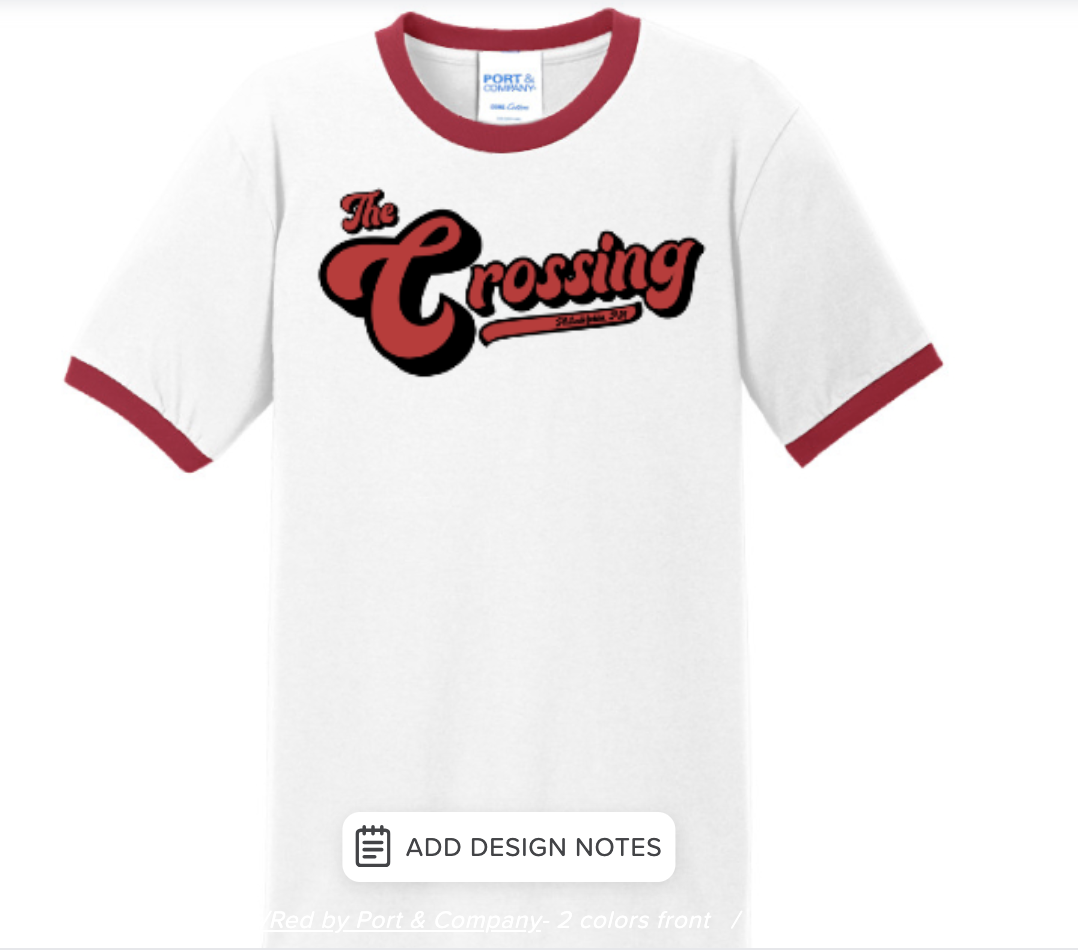
The Crossing “Retro” design, on a ringer t-shirt.
Port & Company® Core Cotton Ringer Tee 100% cotton
Artwork on front of shirt – Back of shirt is blank

The Crossing “Brushstroke Bradshaw” design, originally from the artwork for our 2021 release “The Tower and the Garden” and re-printed in a limited merch run, December 2023.
Gildan Ultra Cotton T-Shirt, ash heather color, 99% pre-shrunk cotton
Artwork on front of shirt – Back of shirt is blank
Art by Steven Bradshaw (tenor in The Crossing) – https://www.stevenbradshawart.com/
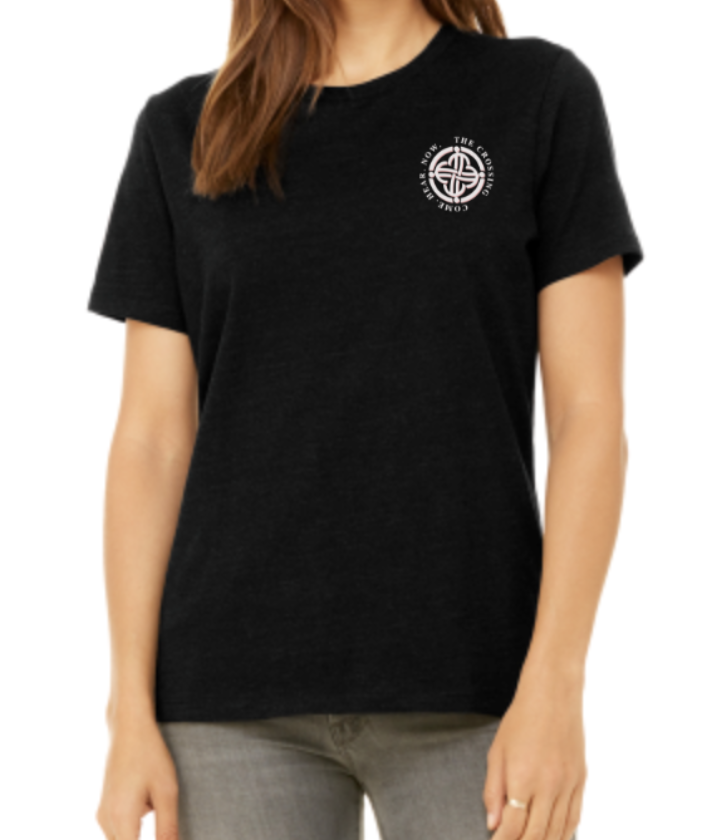
The Crossing “Knot” design, on a black short sleeve T-shirt.
Ladies' Relaxed Jersey Short-Sleeve T-Shirt, Bella + Canvas | B6400


The Crossing “Knot” design, on a black short sleeve T-shirt.
Unisex Jersey T-Shirt, Bella + Canvas | 3001C
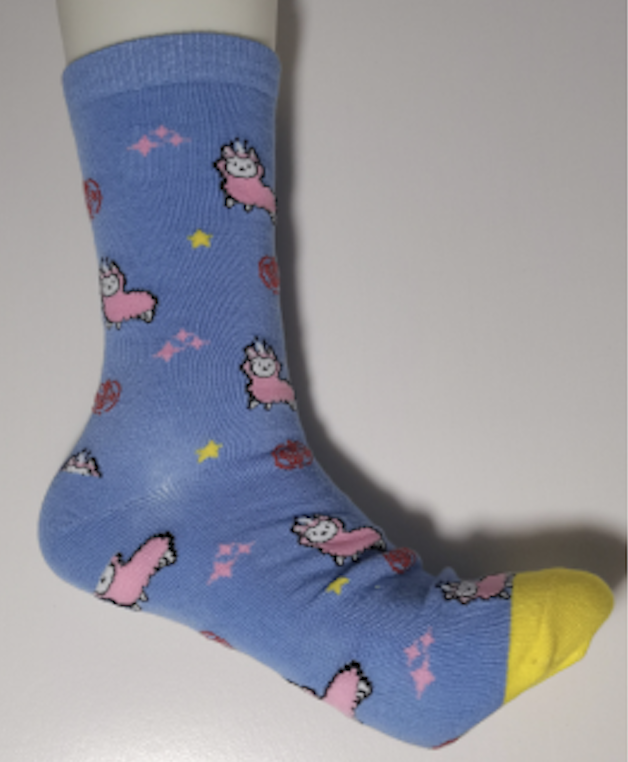
2019-2020 season t-shirt, featuring art from The Arc in the Sky
Royal Apparel Organic USA T-shirt – super soft!
Art by Christopher St. John – https://www.christophermichaelstjohn.com/
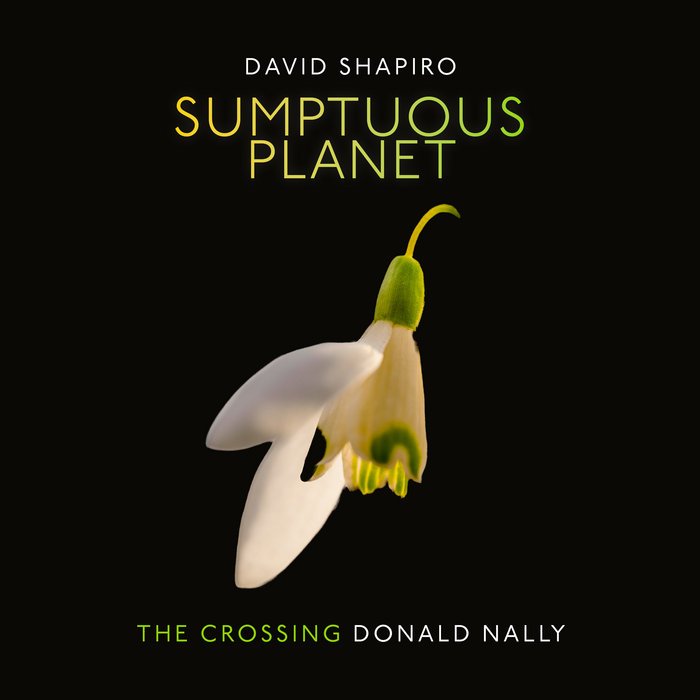
A virtuosic and spectacular concert-length work based primarily on the writings of the evolutionary biologist Richard Dawkins (famous, in part, for his defense of atheism), Sumptuous Planet is an expression of belief about the nature of life and the joy we can find in understanding it, paradoxically told through a Christian Mass and Dawkins' secular world view. The work is at times an impassioned romp; at others an intimate meditation.
Composer David Shapiro writes of Sumptuous Planet: "The work begins with a setting of physicist Richard Feynman’s lament that 'The value of science remains unsung by singers. This is not yet a scientific age.' From there, the piece proceeds to glorify the world as it really is, unadorned by myths or miracle stories. In other words, before the piece begins, we do not yet live in a scientific age. By the end, we do."

TITRATION: a term used in chemistry to describe the process where two reagents are mixed drop by drop to avoid the explosive reaction that would occur from pouring them together quickly. Titration is also used to describe a therapeutic process in which one approaches trauma very slowly, “drop by drop,” so as to avoid unnecessary distress, flooding and potential re-traumatization. No title could be better fitting for Shara Nova’s new cycle of healing songs, recorded by The Crossing with conductor Donald Nally. TITRATION examines the experience of our own bodies, the capacity of our nervous systems, and the quest to identify and embrace our most difficult feelings. Styles converge, warm sounds emerge and voices soar next to laughter, humming, and the energy of Shara’s Indie band roots, with songs deeply inspired by Resmaa Menakem’s Somatic Abolitionist body of work and his call for communal practice. TITRATION offers a glimpse into various healing modalities while extending a hand of self-awareness to listeners alike.
Listen to Donald and Shara talk about the album on WRUU 107.5 Savannah – https://www.wruu.org/broadcasts/41945/

We call our 2021 project “Carols after a Plague” because of the ambiguity of those words.
After? (we had hoped)
A? (just one?)
Plague.
Which plague? Our pandemic?
Or the ongoing plagues we endure: racism, poverty, displacement, environmental deterioration, gun violence, homelessness...
Carol. How?
To many, a familiar song, communal, outside, seasonal.
To others, strange words celebrating what appear to be unlikely persons and events.
Season, song, company. Carol.
We asked twelve composers – twelve, the divisions of the hour, of the year, of the days of Christmas – to respond to our project title, leaving it to them to address what “Carols after a Plague” meant to them: an exercise in perspective, in experience, in histories that are widely and at times wildly different.

"In Inuit tradition the spirit that animates all things is Sila, the breath of the world. Sila is the wind and the weather, the forces of nature. But it’s also something more. Sila is intelligence. It’s consciousness. It’s our awareness of the world around us, and the world’s awareness of us. In this time when we humans are so dramatically changing the earth, Sila: The Breath of the World is an invitation to stop and listen more deeply.
Sila is scored for five ensembles of 16 musicians —woodwinds, brass, percussion, strings, and voices— who may perform the music in any combination, successively or simultaneously, outdoors, or in a large indoor space. The musicians are dispersed widely, surrounding the listeners, who are free to move around and discover their own individual listening points.
Sila comes out of the earth and rises to the sky, floating upward through sixteen harmonic clouds, grounded on the first sixteen harmonics of a low B-flat. All the other tones in the music fall “between the cracks” of the piano keyboard—off the grid of twelve-tone equal temperament.
Like the harmonies, the flow of musical time in Sila is also off the grid. There is no conductor. Each musician is a soloist, who plays or sings a unique part at her or his own pace. The sequence of musical events is composed, but the length of each event is flexible. The music breathes.
A performance of Sila lasts about an hour. There is no clearly demarcated ending, as the music gradually dissolves back into the breath of the world." – John Luther Adams
This recording was made with generous support from The University of Michigan Office of Research. Special thanks to Bruce Barber and the congregation and staff at Christ Church Christiana Hundred.
Commissioned by Lincoln Center for the Performing Arts, Washington Performing Arts, Ojai Festival, Cal Performances and the La Jolla Symphony.

Contemporary music needn’t sacrifice order and aesthetic appeal, even when it deals with complex issues. A glowing example of this is BORN: THE MUSIC OF EDIE HILL AND MICHAEL GILBERTSON, with conductor Donald Nally leading GRAMMY-winning professional chamber choir The Crossing on a breathtakingly beautiful expedition into themes of extinctions, relationships and their complexities, loss, and love.
Throughout this splendid amalgamation of Hill’s and Gilbertson’s ethereal, energetic, raw, and impactful compositions, the nuance of Nally’s conducting, and The Crossing’s superb expressiveness are ever-present. Singing that is transcendent and authentic.
Read an interview with Edie, Michael, and Donald on WOSU, here.
Album liner notes, here.
The recording of Born: music of Edie Hill and Michael Gilbertson is made possible through the generous support of Carol Westfall, longtime friend and benefactor of The Crossing.
Album artwork by Christopher St. John.

The Crossing, Al-Bustan Seeds of Culture, and Navona Records present Words Adorned. Conducted by Donald Nally, with Takht musical direction by Hanna Khoury, the combined forces interpret lush scores from Kinan Abou-afach and Kareem Roustom; the music is at times driven and passionate, at others mystical and lyrical, responding to ancient Andalusian poetry in the Muwashshah tradition. The takht – masterfully handling the oud, qanun, violin, cello, and percussion – guides the kaleidoscopic sounds and colors in these poems of love, revelry, and war, with additional solo work by Dalal Abu Amneh.
Words Adorned was made and originally released as part of an Al-Bustan Seeds of Culture multimedia project inspired by Andalusian poetry, with a series of events and newly commissioned works bridging the traditions of East & West. This re-release on Navona Records is produced by Jonathan Bradley, Donald Nally, and Kevin Vondrak. Major support for Words Adorned has been provided by The Pew Center for Arts & Heritage, with additional support from the Arab Fund for Arts & Culture and the William Penn Foundation.
The Al-Bustan team who has developed this project includes Founder/Executive Director Hazami Sayed, Music Director Hanna Khoury, Project Manager Ahmad Almallah, Marketing Director Morgan Gengo, Publicist Cindy Byram, Digital Designer Ayman Alalao, and Program Assistant Eman Haj. Ashley Choukeir and Hanane Kai created the graphic identity and designs, Dave Tavani created the series of videos documenting the process, Jasmine Erdener created the podcasts, and Joe Hannigan provided sound and audio recordings.
Recorded December 4, 2015 at Goodhart Hall, Bryn Mawr College in Bryn Mawr PA
Live Sound Assistant, Jonathan Orose
Recording Assistant, James Clark Conner
Recorded, Mixed, Edited & Mastered by Joe Hannigan at Weston Sound
Al-Bustan Takht Ensemble
Hanna Khoury, violin and music director
Wassim Odeh, oud
Hicham Chami, qanun
Kinan Abou-Afach, cello
Hafez Kotain, percussion

Navona Records presents A Native Hill from Philadelphia’s professional chamber choir, The Crossing. This monumental unaccompanied work is the result of a collaboration with composer Gavin Bryars, whose previous work for The Crossing won them their first of two recent Grammy awards. With intimate knowledge of the individual voices and art of each singer, Bryars composed A Native Hill to capitalize on the group’s unique sound, personality, and esprit de corps. A Native Hill is based on American author and environmentalist Wendell Berry’s 1968 essay of the same name, which examines bucolic elements of rural life, suffused with deeper metaphysical and political implications. The new album is full of rich, complex vocal textures, dense chromatic clusters, and moments of profound simplicity, offering an opportunity to reflect on life’s timeless questions.

The Tower and The Garden marks the 23rd studio release from The Crossing, and ponders the fragility of the earth, the awe of nature, and the power of language to unite, or divide, society.
The album features commissioned works from Gregory Spears, Joel Puckett, and Toivo Tulev in a widely varied collection that draws on words and poetry of Keith Garebian, Denise Levertov, Thomas Merton, the Botswanan shaman Kxao =Oah, and Walt Whitman. The results: in Tulev’s hands, a churning, haunting rumination on death; in Spears’, a sometimes hymnlike, at other exuberant study on the collision of religion, technology, and conservation; and in Puckett’s, a mesmerizing mediation on transformation and the coming together of body and spirit into oneness.

New York Times – The 25 Best Classical Music Tracks of 2020
NPR – Best Classical Albums for a Troubled 2020
Rising w/ The Crossing collects 12 live concert recordings from The Crossing's archives, which were featured in our pandemic-inspired project of the same name. Included are collaborations with International Contemporary Ensemble and rare recordings of The Crossing singing early music from Buxtehude's Membra Jesu nostri with Quicksilver Baroque, alongside newly released recordings by Ted Hearne, David Lang, Eriks Esenvalds, Santa Ratniece, Paul Fowler, and Joby Talbot.
The first 60 chapters of Rising w/ The Crossing ran from March to June and can be found at www.crossingchoir.org/rising – the series gained national attention and was featured in Los Angeles Times, The New York Times, Washington Post, and Performance Today; it has been archived by The Library of Congress as a cultural artifact as an "important part of this collection and the historical record."
Released December 11, 2020 on New Focus Recordings
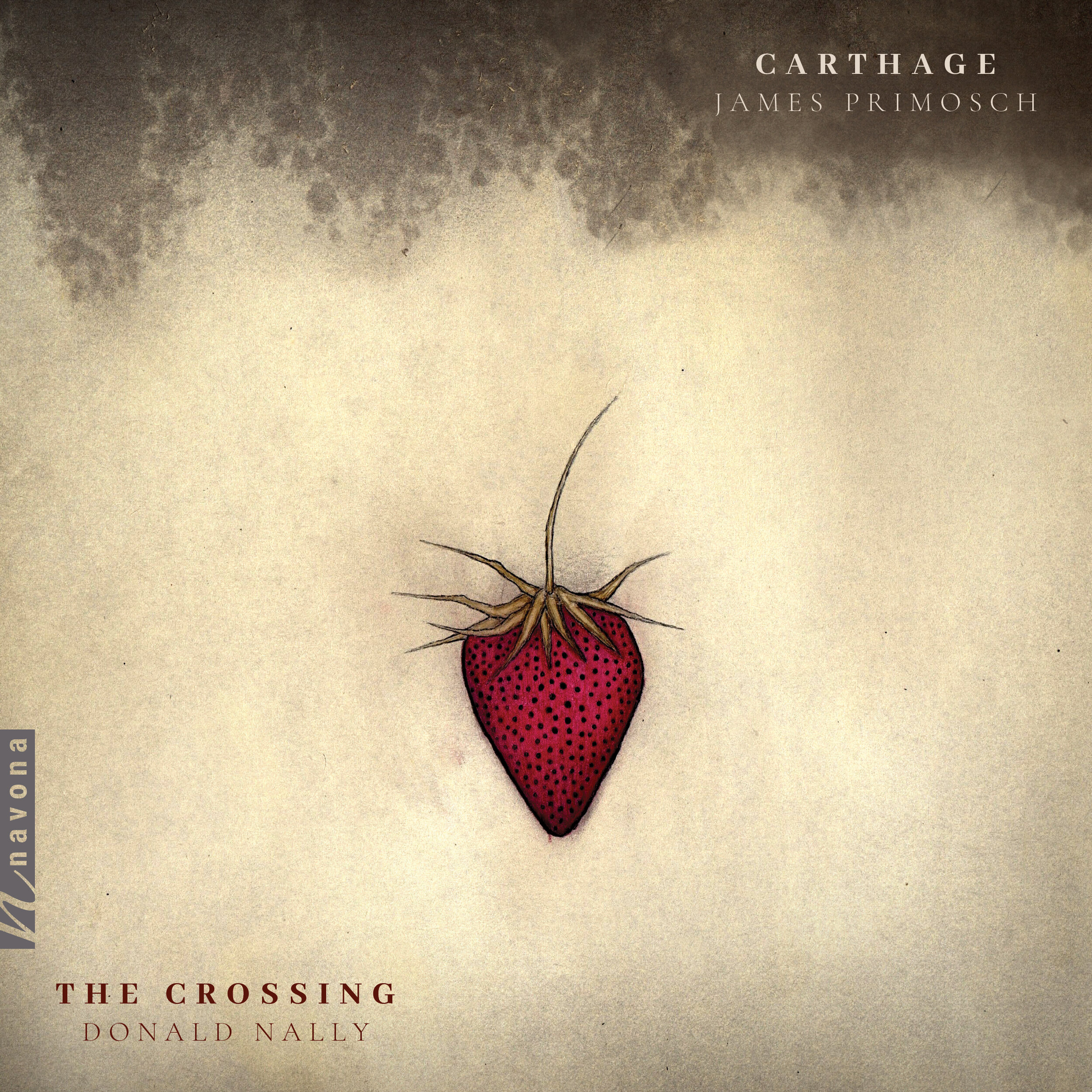
The latest installment in a multi-album series with Navona Records, CARTHAGE offers six striking pieces by composer James Primosch that confront the most elemental questions of Western philosophy. Internationally recognized and prolific, Primosch is the 2020 winner of The Virgil Thomson Award for Vocal Music from The American Academy of Arts and Letters.
Learn more about this album HERE
Album Artwork by Steven Bradshaw
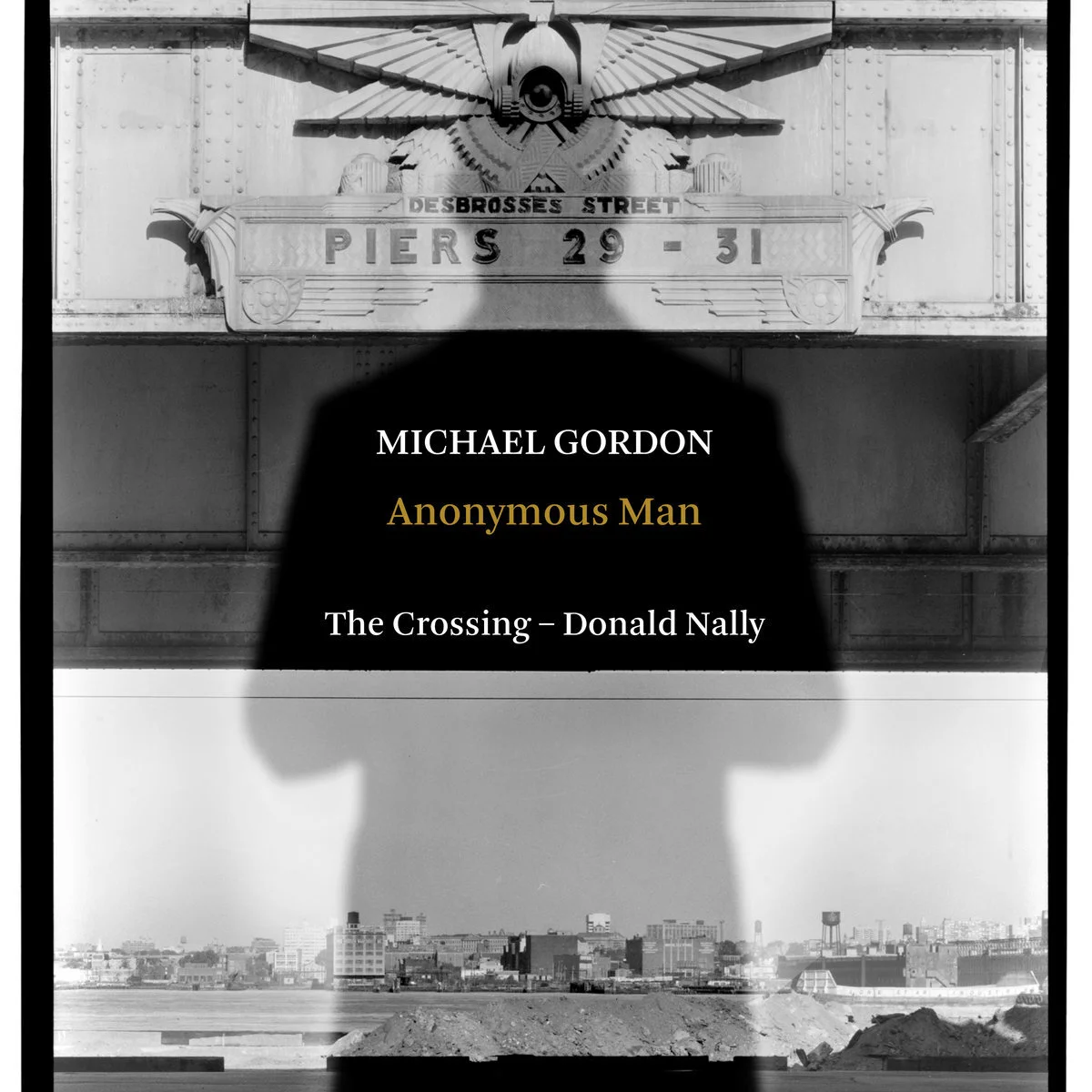
“This work began with a discussion about diaspora—the disengaged, relocated, lost. But in Michael's thoughtful hands, it has grown into a beautiful contemplation of what a community is and does; how it makes, holds, and loses its own history. It's very personal; it has an intimacy that invites us to contemplate connections—those that are purposeful and those that happen by coincidence of time and place.” —Donald Nally
Selected for New Sounds “Top 10 of 2020”
Scored for 24 unaccompanied voices, Anonymous Man is an hour-long piece that expands on Michael Gordon’s inventive approach to composition, layering minimalistic swirls of vocal sound on top of one another to create a hypnotic incantation.
Explore Texts, Videos and more
at www.crossingchoir.org/anonymous-man
Gordon drew inspiration for the piece from his neighborhood in lower Manhattan. "When I moved into my loft on Desbrosses Street, the streets were empty, since few people lived there. Over time, the neighborhood changed from an industrial warehouse district to a residential area. Anonymous Man is a memoir about my block; it’s built around my memories of moving in, meeting my future wife for the first time there, and conversations I’ve had with two men who made their home on the loading dock across the street."

2019 Grammy-nominated for Best Contemporary Classical Composition + Best Engineered Album: Classical
Fire in my mouth, co-commissioned by the New York Philharmonic, is a searingly vivid evocation of the Triangle Shirtwaist Factory fire. The performances featured The Crossing and the Young People’s Chorus of New York City, directed by Francisco J. Núñez. The New York Times called the work “ambitious, heartfelt, often compelling. … There is both heady optimism and a sense of dread in Ms. Wolfe’s music. … Mr. van Zweden led a commanding account of a score that … ends with an elegiac final chorus in which the names of all 146 victims are tenderly sung to create a fabric of music and memory.”
Immigration
Factory
Protest
Fire

Voyages (1994) Robert Convery
1. I 3:19
2. II 3:12
3. III 4:02
4. IV 5:17
5. V 4:29
6. VI 5:55
Voyages, Cantata No. 2, Op. 41 (2018) Benjamin C.S. Boyle
7. I Avowal: Bind us in time 2:10
8. II Seascape: Above the fresh ruffles of the surf 4:38
9. III Pairings: And yet this great wink of eternity 3:40
10. IVa Aria: This tendered theme of you 2:26
11. IVb Aria: And so, admitted through black swollen gates 4:28
12. V Descent: Meticulous, infrangible, and lonely 5:51
13. VI Chorale: Draw in your head 1:47
At first, two settings of the same words may seem odd album mates. But, owing to the riches to be mined in Hart Crane’s Voyages, two settings of this masterpiece of early-20th-century poetry complement each other in myriad ways. These are two major works from two of the most creative artists writing for voice today. As conductor Donald Nally remarks in his program note, “We’ve found thousands of ways to sing ‘Lord, have mercy.’ What are two ways of finding the music in, ‘the bottom of the sea is cruel?’” Indeed, that line is set so distinctly, so chillingly, by each composer that their individual world-views, expressed in counterpoint, linger long after the music has ended.
Robert Convery’s Voyages follows Crane’s words verbatim, capturing the structure, exploring each poem as a miniature life lived, and focusing on the inherently musical meters of Crane’s dazzling vocabulary. Convery’s world is one in which subtle harmonic shifts open up forgotten emotional universes, and abrupt tempo changes instantaneously transform a serene moment to one of complex feelings and desperation. His focus on color would lead one to believe the work was written for The Crossing.
For his Voyages, Cantata No. 2, Op. 41 Benjamin Boyle has created a cantata-like structure excerpting some of Crane’s most intimate and wrenching moments. With the addition of a string chamber orchestra, it feels as if Boyle has considered Crane’s words distilled and he has blown a kind new life into them – a very personal response to the feelings Crane hopes to evoke through imagery. The double-choir moment of “Meticulous, infrangible, and lonely” – in which the edges of a relationship become blurred and all seems like a memory – is as heart-breaking as music gets. The solo moments offer a wide range: fragile, vibrant, warm, hopeful – all executed here with virtuosity and breadth.
BESIEGED unites three contemporary composers whose choices of texts are widely varying: Stacy Garrop sets stories of Lydia Davis in which decay and disintegration are metaphors for old age and isolation. Robert Maggio alternates psychiatrist Dr. Alzheimer’s notes on his first diagnosed patient with her confused, frightening experience. And Christopher Jessup looks skyward, with Whitman, to ponder unanswerable questions about our being in relation to the stars. The Crossing, with its signature expressive precision, brings these works together, balancing sadness and wonder into a coherent journey of clarion sound.